
Birds in America
A wildlife photographer in Colorado once installed a camera trap on a cliff where Peregrine Falcons hunt. The footage left all who watched it in awe. One falcon, released from the rock, dove down like a teardrop. Its speed was nearly incomprehensible — a living missile approaching a pigeon at a pace you associate with cars on a freeway, not birds made of bones and feathers. The pigeon didn’t stand a chance.
We discuss speedy animals like we discuss fast cars — lightly and impressively, but without grasping the real numbers. So, let’s get to the bottom of what these speeds mean, how birds reach them, and which American species deserve mention.
The fastest bird in America isn’t just fast. It’s the fastest animal in the world.
The Numbers Are In: How Bird Speed Really Works
This is something most speed lists overlook — and it’s significant. Bird speed is not one single thing. There are three different kinds of speed, each with a very different meaning:
-
Diving Speed: The speed a bird reaches when it tucks in its wings and drops in a controlled dive. Gravity assists, producing the highest numbers.
-
Horizontal Flight Speed: The average speed a bird travels during migration or everyday life. This speed is harder to maintain.
-
Burst Speed: A brief sprint of full effort, used for evading predators or attacking prey. This speed may be very fast but isn’t sustainable.
A bird might be the world’s fastest diver but a poor horizontal flier. Understanding these types of speed is crucial.
Meet the Contenders
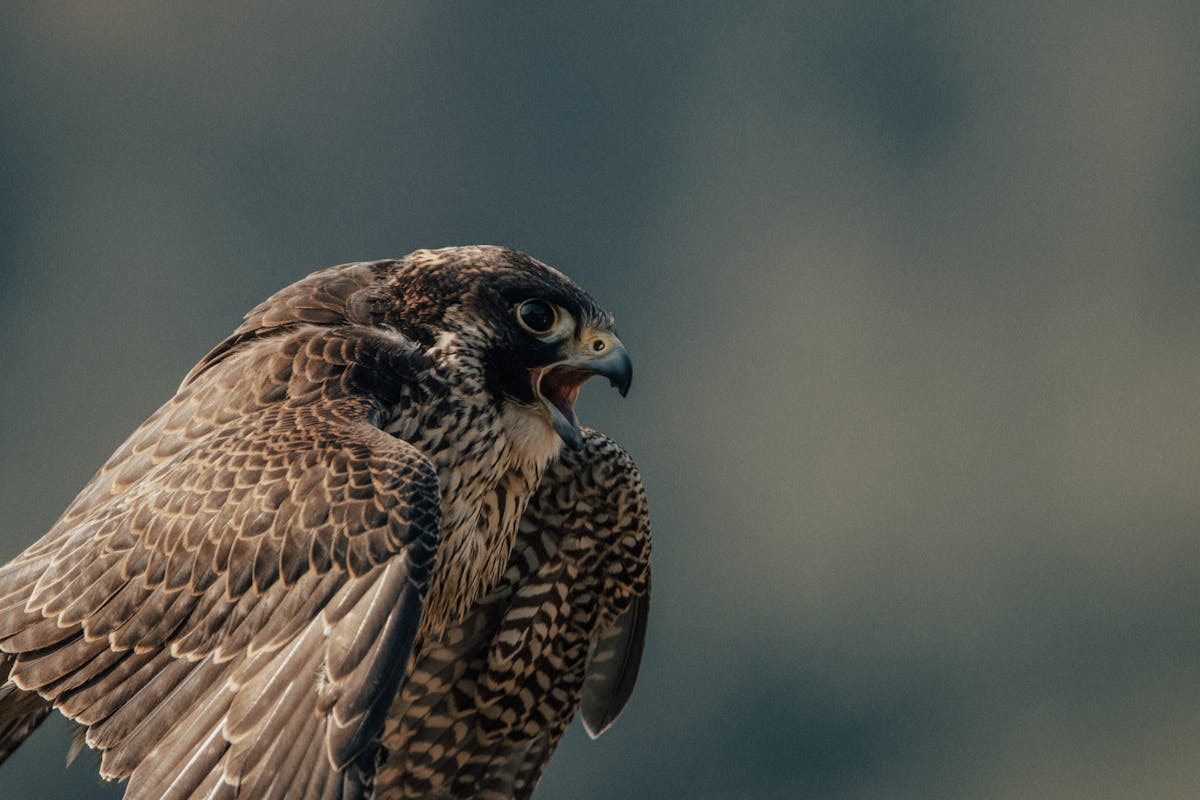
Peregrine Falcon — The Unquestioned Winner
-
Cruising Speed: 55-65 mph
-
Diving Speed (Average): >240 mph
Nothing else comes close. The Peregrine Falcon is the fastest animal on Earth — not just the fastest bird or flier. During the hunting dive, known as a stoop, the Peregrine folds its wings into a teardrop shape and drops from heights of up to 3,000 feet. Reports show speeds exceeding 240 mph. Some trained falconry birds have been tracked at nearly 270 mph.
For comparison, a car going 70 mph is at highway speed. In a full stoop, the Peregrine travels more than three times faster.
Remarkably, the Peregrine hunts at these speeds. It follows moving targets, computes trajectories, and hits with enough force to kill — all while flying faster than a diving skydiver.
Physical adaptations make this possible:
-
Small bony tubercles in its nostrils direct airflow away from the lungs to prevent damage.
-
A third eyelid, called the nictitating membrane, protects its eyes from debris while allowing it to see.
-
Its heart rate increases without failing.
Peregrines nest throughout North America, from Arctic cliffs to city skyscrapers. If you live in a major American city, there’s a good chance a Peregrine nests nearby.
Golden Eagle — Altitudes of Power and Precision
-
Diving Speed: 200 mph or more
-
Horizontal Speed: 28–35 mph
If the Peregrine is a smart munition, then the Golden Eagle is a carpet bomb. This powerful bird has a wingspan of up to 7.5 feet and weighs about 15 pounds. During a hunting dive, it can reach nearly 200 mph.
Golden Eagles hunt differently. They rely on terrain, swooping low and fast over ridges to catch jackrabbits, prairie dogs, and even young deer.
A Golden Eagle strike delivers an impact few animals can withstand. They are year-round residents across western North America, from Alaska to the Rocky Mountain states. Sighting one in a full dive is an unforgettable experience.
Bald Eagle — Slower Than You Might Think
-
Speed at Landing: 100 mph
-
Speed in Level Flight: 35–44 mph
Now, here is where we complicate the national image. Bald Eagles are magnificent and iconic, but they are not the fastest in America — and their speed is often exaggerated.
In a fishing dive, a Bald Eagle descends at about 75 to 100 mph, which sounds impressive until compared to the Peregrine. In level flight, they cruise at 35 to 44 mph — decent for their size but not exceptional.
What they lack in speed, they make up for in other ways. Bald Eagles are masters at thermal riding, using warm air currents to soar with little effort. They also often steal fish from Ospreys rather than catching their own — a behavior Benjamin Franklin famously criticized when he opposed the Bald Eagle as our national symbol.
But speed was never the object with this bird. Presence was.
Red-Breasted Merganser — The Dark Horse Candidate
-
Mechanical Speed: 80 mph+
This one surprises everyone. The Red-Breasted Merganser is not a raptor or bird of prey. This diving duck, with its extravagant crest and serrated bill, has the highest recorded flying speed of any bird in level flight in North America.
A Red-Breasted Merganser reached an astonishing 80 mph in sustained flight during a survey in the 1960s. The bird was tracked from a low-flying aircraft.
Why can this duck fly so fast? It has long, slender wings designed for efficient travel at high speeds, a streamlined body, and the pressure of being a migratory bird that travels vast distances.
They’re not flashy. You might not even recognize one if you saw it. But in a speed contest in a straight line with almost any other bird in America, the Red-Breasted Merganser wins.
White-Throated Swift — One of the Fastest Small Birds
Speed Sideways: Up to 70 mph
Swifts are made for one place: the air.
They eat in the air. They snooze in the sky — seizing micro-naps on long stretches of gliding. They mate in the air. Some people go months at a time without hitting anything steady.
The fastest swift in North America is the White-Throated Swift, who lives in the rocky canyons and mountain cliffs of the American West. Its slender, scythe-like wings and compact body are designed for flat-out flyer efficiency, holding constant speeds of about 70 mph in level flight with what looks like minimal work.
If you’ve seen one chasing insects over a cliff face at dusk — banking, twisting, accelerating — you see the reason swifts have been called nature’s closest approach to pure flight instinct.
Canvasback Duck — The Thousand-Mile-Per-Hour Duck
Linear Speed: Up to 72 MPH
The Canvasback is an intensely handsome diving duck. It has a rust-red head and a short, sloped bill. This duck migrates in large flocks across North America, flying fast. It can reach sustained speeds of 70 to 72 mph, making it one of the fastest waterfowl on the continent.
Migration Necessity
Canvasbacks nest in the Prairie Pothole region of central North America. They winter on both coasts and in the Gulf states, leading to a thousands-of-miles migration that requires efficiency.
Timeline of the Fastest Common Backyard Bird — Mourning Dove
Quickly They Actually Fly
Retrograde Speed: 40–55 mph
For most Americans, the Mourning Dove is the fastest bird they will see up close.
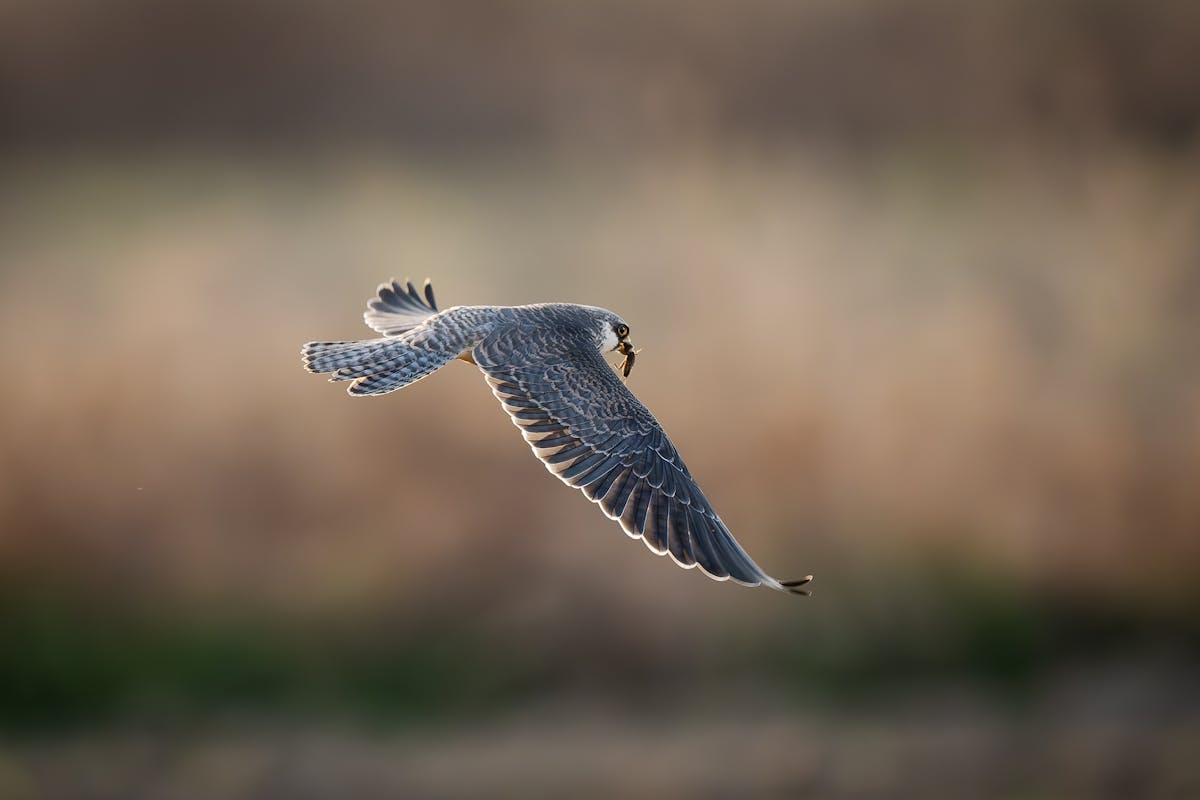
When faced with a hawk, this meek bird surprises everyone. It breaks into a sudden burst of speed, reaching 55 mph almost instantly in escape flight.
Surprising Speed
For a garden bird that usually pecks slowly and coos, this speed is shocking. The wing whistle as it takes off is believed to be an alarm signal, warning other doves of danger.
American Kestrel — Tiny, Fast, and Really Underappreciated
Horizontal Speed: Up to 39 mph | Hunting Dive: Faster
The American Kestrel is America’s smallest falcon and one of its most athletic birds.
Impressive Aerial Control
-
Hovering Master: It can hang in the wind over open fields.
-
Hunting Dive: It drops down at controlled dive speeds of up to 39 mph.
-
Precision: It can hover nearly motionless in a 20 mph headwind and accurately target insects or small mice.
Look for them perched on telephone wires along rural roads across America.
Speed Rankings At a Glance
Bird TypeType of SpeedTop SpeedPeregrine FalconDiving240+ mphGolden EagleDiving200 mphBald EagleDiving100 mphRed-Breasted MerganserLevel flight80 mphWhite-Throated SwiftLevel flight70 mphCanvasback DuckLevel flight72 mphMourning DoveBurst/escape55 mphAmerican KestrelLevel flight~39 mph
What Speed Actually Costs
Flying fast is expensive. It uses a lot of energy.
A Peregrine falcon in a full stoop is not saving energy. Instead, it uses energy at unsustainable rates. The dive is a regulated usage of stored energy for a kill. If it misses, that energy is wasted.
Accuracy and Speed
Fast birds are also precise birds. Speed without accuracy means wasted fuel. The Peregrine’s speed and accuracy evolved together, showing you cannot have one without the other.
Most birds don’t fly near their top speed most of the time. Trimming to 60 percent of maximum speed is much more efficient. Migrating birds, which fly thousands of miles, optimize for endurance, not speed.
The top speeds mentioned are peak moments, like a sprint finish, not a lifestyle.
The Bird That Puts Everything Else to Shame
We started with the Peregrine Falcon. Let’s end with it too.
240 miles per hour. A body the size of a crow. Hollow bones, feathers, and a heart the size of a walnut power this incredible bird.
No engineer has yet created a drone that matches the Peregrine’s combination of velocity, maneuverability, and precision. Researchers study its stoop to improve aircraft and wind turbine design.
Cheetahs may not be the fastest animal on Earth. Neither are sailfish or fighter planes.
It’s a bird, soaring above an American city, hunting on a Tuesday afternoon.
And it has been doing so, unaltered and unrivaled, for millions of years before we arrived to measure it.
Loved this article?

MD Imdadul Haque is the founder of BirdzFly, a research-backed resource on North American backyard birds. Drawing on years of independent study into bird identification, behavior, and migration patterns, he writes in-depth guides designed to help US birders understand the species in their own backyards — from common feeder visitors to seasonal migrants passing through.