
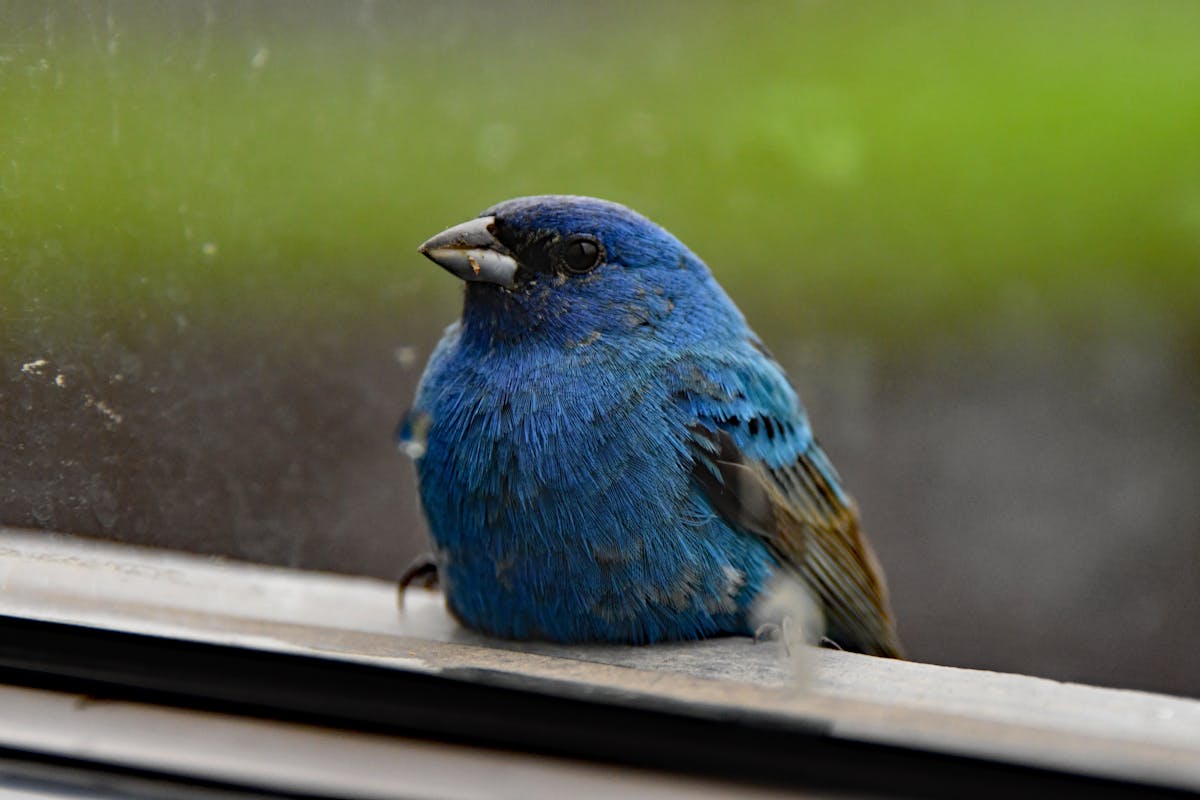
A bird hitting your window is startling. It happens fast — a loud thud, then either silence or a stunned bird on the ground below. Most people’s first question is whether the bird is okay. Their second question is what it means.
Both questions have answers. The science is well-documented. The spiritual traditions are old and consistent. Both are covered here.
Why Do Birds Fly Into Windows? The Science
Up to 1 billion birds die from window strikes in the United States every year, making it one of the leading human-caused sources of bird mortality. The problem is not bird stupidity — it is bird vision.
Birds process visual information differently than humans. Windows are invisible to them in two ways:
Transparency. A window with vegetation on the other side looks like open space to a bird. It sees the plants through the glass and flies toward them, not understanding that solid glass is in the way.
Reflection. A window reflecting sky or trees looks like more sky or trees. During migration especially, birds flying at speed see what appears to be open corridor and hit the glass before they can adjust.
Neither perception is a mistake in the bird’s world — glass simply does not exist in nature, and their visual processing has no framework for it.
Which Birds Hit Windows Most Often
- Migratory songbirds during spring and fall — warblers, thrushes, sparrows, and vireos moving at speed through unfamiliar areas hit windows in much higher numbers than resident birds
- Males attacking their own reflection in spring — particularly Northern Cardinals and American Robins. These birds see their reflection as a rival male and repeatedly strike the glass trying to drive it off. This looks different from a collision — the bird is not stunned, just persistent and territorial.
- First-year birds on their first migration, with no experience of windows
What to Do If a Bird Hits Your Window
If the Bird Is Stunned but Alive
- Place the bird gently in a small cardboard box with a few air holes punched in the sides. A shoebox works well.
- Put the box in a warm, quiet place away from pets and children.
- Do not offer food or water — a stunned bird cannot swallow safely and may aspirate liquid into its lungs.
- Wait 30–60 minutes without checking. Most stunned birds recover fully within an hour if left undisturbed.
- When the time is up, take the box outside, open it, and let the bird leave on its own. If it flies away normally, it has recovered.
If the Bird Seems Injured
If the bird cannot stand, has a drooping wing, or is bleeding, contact a licensed wildlife rehabilitator. Find one near you at wildliferehabber.org or through your state wildlife agency. Do not attempt to treat injuries yourself.
If the Bird Is Dead
Window strikes kill birds instantly in most cases. You can remove the bird from the area — no legal requirement applies. If you want to help researchers, photograph the species before removing it. Window strike data contributes to studies on bird mortality and migration.
How to Stop Birds Hitting Your Windows
The solutions that actually work:
- Window decals in a grid pattern — Apply stickers or tape to the outside of the glass in a grid with no more than 2 inches between marks vertically and 4 inches horizontally. This breaks up the reflection enough that birds recognize the surface as a barrier. A few random decals do not work — the spacing matters.
- ABC BirdTape or CollidEscape film — Commercial products designed specifically for this purpose. Applied to the outside of the glass.
- External netting — Placed 2–3 inches off the glass. Creates a buffer that stops birds from hitting the glass at speed, preventing injury even if they contact the net.
- Move feeders — Keep feeders either within 3 feet of windows (so birds can’t build speed) or more than 30 feet away (far enough that they approach from a safe angle). The danger zone is 4–30 feet.
- Angle windows — Glass angled downward at 20+ degrees reflects the ground rather than sky, eliminating the reflection problem at the source.
Spiritual Meaning: What Does It Mean When a Bird Hits Your Window?
Across folk traditions, a bird hitting a window carries meaning that goes beyond accident. Here are the most consistently reported interpretations:
A Message From Someone Who Has Passed
The most common spiritual interpretation across multiple traditions is that a bird hitting your window represents a spirit or message from someone who has died. Birds are widely seen as intermediaries between the living and the dead — creatures that move freely between the earth and sky, between this world and whatever lies beyond it. A sudden, forceful contact between a bird and your window is sometimes read as a more urgent version of the gentle visit — a spirit trying harder to get your attention.
A Warning of Change
In many cultures, an unexpected bird event at your home — especially one involving the glass threshold between inside and outside — signals a significant change coming. Not necessarily bad change, but significant: a transition in your life, a decision that cannot be avoided, or the end of one chapter and the beginning of another.
An Omen of Death
This is the most feared interpretation, and it appears in English, Scottish, Irish, and many other folk traditions. A bird striking a window or flying into a house was historically taken as a sign that someone in the household would die. This belief is very old. Whether it has predictive power is a matter of personal belief — but it is worth knowing it exists if you grew up in a family that held it, because the fear is real even when the event is accidental.
A Call to Pay Attention
Outside of specific omens, many people simply interpret a bird hitting their window as a signal to stop and notice something. The bird forced you to look up from whatever you were doing. The question that follows — what were you ignoring? what needs attention? — is considered part of the message.
What the Species Means Spiritually
| Bird | Spiritual Association |
|---|---|
| Cardinal | Message from a deceased loved one — the most commonly reported and most consistently interpreted |
| Robin | Renewal, hope, new beginnings after loss |
| Dove | Peace, reconciliation, a gentle message of comfort |
| Hawk or Eagle | Clarity, a call for decisive action or higher perspective |
| Owl | Transformation, significant change; in some traditions, death |
| Crow or Raven | Mystery, magic, a message requiring reflection |
| Hummingbird | Joy, lightness, a sign that something hopeful is near |
| Sparrow or Wren | A small but significant message; community, home, belonging |
If It Keeps Happening: Repeated Window Strikes
If the same bird hits your window repeatedly — especially in spring — it is almost certainly a territorial male attacking his own reflection. This is not a spiritual event. It is a bird that cannot distinguish his reflection from a rival. Solutions include temporarily covering the outside of the glass with paper or fabric, or applying decals to break up the reflection. The behavior usually stops within a few weeks as breeding season ends.
FAQ
What does it mean when a bird hits your window and dies?
Scientifically, window strikes are fatal at high speed. Spiritually, many traditions see a bird dying at your window as a more significant version of the window-strike omen — a stronger message, more urgency, something that genuinely requires your attention.
Is a bird hitting your window good or bad luck?
Depends on the tradition. Most folk interpretations lean toward warning or transition rather than good luck. The cardinal exception (literally) is the cardinal — a cardinal hitting your window is widely interpreted as a visit from a loved one, which most people experience as comforting rather than ominous.
Why does a bird keep hitting my window?
Almost always: a territorial male attacking his reflection. Cover the outside of the glass temporarily to break the reflection loop.
Should I be worried if a bird hits my window?
About the bird’s welfare, yes — help it recover if it’s stunned. About the spiritual meaning, that’s personal. About a general omen of bad luck, most traditions say to pay attention rather than worry.
For more on bird symbolism, see our guides on robin symbolism, hawk spiritual meaning, mourning dove symbolism, and cardinal visit meaning.

MD Imdadul Haque is the founder of BirdzFly, a research-backed resource on North American backyard birds. Drawing on years of independent study into bird identification, behavior, and migration patterns, he writes in-depth guides designed to help US birders understand the species in their own backyards — from common feeder visitors to seasonal migrants passing through.

