
Introduction
Ultimate Identification Guide (2026)
Texas has the most bird species in the US, with over 650 species recorded! Many of these birds will visit your backyard.
Texas backyards draw a stunning variety of birds. They range from the piney woods of East Texas to the cedar breaks of the Hill Country. You can also find them in the Coastal Bend and the Chihuahuan Desert of the Trans-Pecos. Add a few feeders, plant native plants, and have a watering source to transform your backyard into a birding paradise.
This by season. It includes tips for identifying them, their food preferences, and notes on their behavior. This will help you enjoy each visitor.
Year-Round Backyard Residents of Texas
These birds visit your yard during all four seasons.
Northern Cardinal (Cardinalis cardinalis)
The Northern Cardinal is perhaps Texas’s most iconic backyard bird. The male is bright red from crest to tail and is one of the most brilliant birds in North America.
ID Key Points:
-
Adult Male: Red all over, black face mask, heavy orange-red bill.
-
Female: Brown with red mainly on the wings, tail, crest, and has a red bill.
-
The crest is a characteristic of both sexes.
Feeding: Cardinals prefer sunflower and safflower seeds. Use a platform feeder close to the ground for reliable visits.
Behavior: Males are territorial in spring. Their loud “cheer-cheer-cheer” call is often heard before they are seen.
Range in Texas: Statewide, except for uncommon areas in extreme west Texas.
Blue Jay (Cyanocitta cristata)
The Blue Jay is bold and smart, but it can divide birders. Some love its personality, while others dislike it for taking over feeders.
ID Key Points:
-
Black necklace, white below, vivid blue above.
-
Crest raises when excited.
-
Bright white spots on wings and tail.
Feeding: Blue Jays cache food, making numerous trips to feeders. They love:
-
Peanuts (in or out of the shell)
-
Sunflower seeds
-
Acorns
Note: Blue Jays are very intelligent. They recognize individual humans and can even use tools.
Carolina Chickadee (Poecile carolinensis)
The Carolina Chickadee is small, sassy, and fearless of people. In some areas, they will let you feed them from your hand.
ID Key Points:
-
Dark black cap and neck, white moustachial stripe, gray back.
-
Buff brown flanks.
Feeding: Chickadees prefer tube feeders. They take one seed at a time and love:
-
Sunflower seeds
-
Nyjer (thistle) seeds
Distribution in Texas: Found in the eastern two-thirds of the state.
Tufted Titmouse (Baeolophus bicolor)
The Tufted Titmouse is a larger cousin of the chickadee. It has a gray crest, large dark eye, and rusty flanks.
Feeding: They enjoy:
-
Sunflower seeds
-
Peanuts
-
Suet
White-winged Dove (Zenaida asiatica)
The White-winged Dove has become common in most of Texas, expanding its range over the last 30 years.
ID Key Points:
-
Large dove, brown-gray overall.
-
Wide white line on wing border.
-
Longer tail than Mourning Dove.
Feeding: They flock to ground and platform feeders, enjoying:
-
Sunflower seeds
-
Cracked corn
-
Millet
Mourning Dove (Zenaida macroura)
The Mourning Dove is one of the most common backyard visitors and is also a popular game bird.
ID Key Points:
-
Slender, long-tailed dove.
-
Brownish-gray with black wing markings.
Feeding: They prefer ground feeding and enjoy:
-
Millet
-
Cracked corn
-
Sunflower seeds
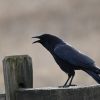
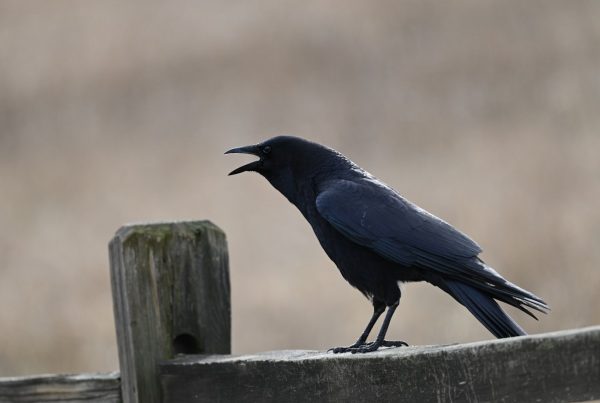
American Crow (Corvus brachyrhynchos)
Crows are known for their intelligence and are often loud and social.
ID Key Points:
-
Large, completely black bird with a fan-shaped tail.
Notes: Crows live in family units and can recognize human faces.
Carolina Wren (Thryothorus ludovicianus)
The Carolina Wren is famous for its impressive vocals, singing loudly in your backyard.
ID Key Points:
-
Rich rusty-brown above, warm buffy below.
Food: They enjoy:
-
Suet
-
Mealworms
-
Peanut butter-based products
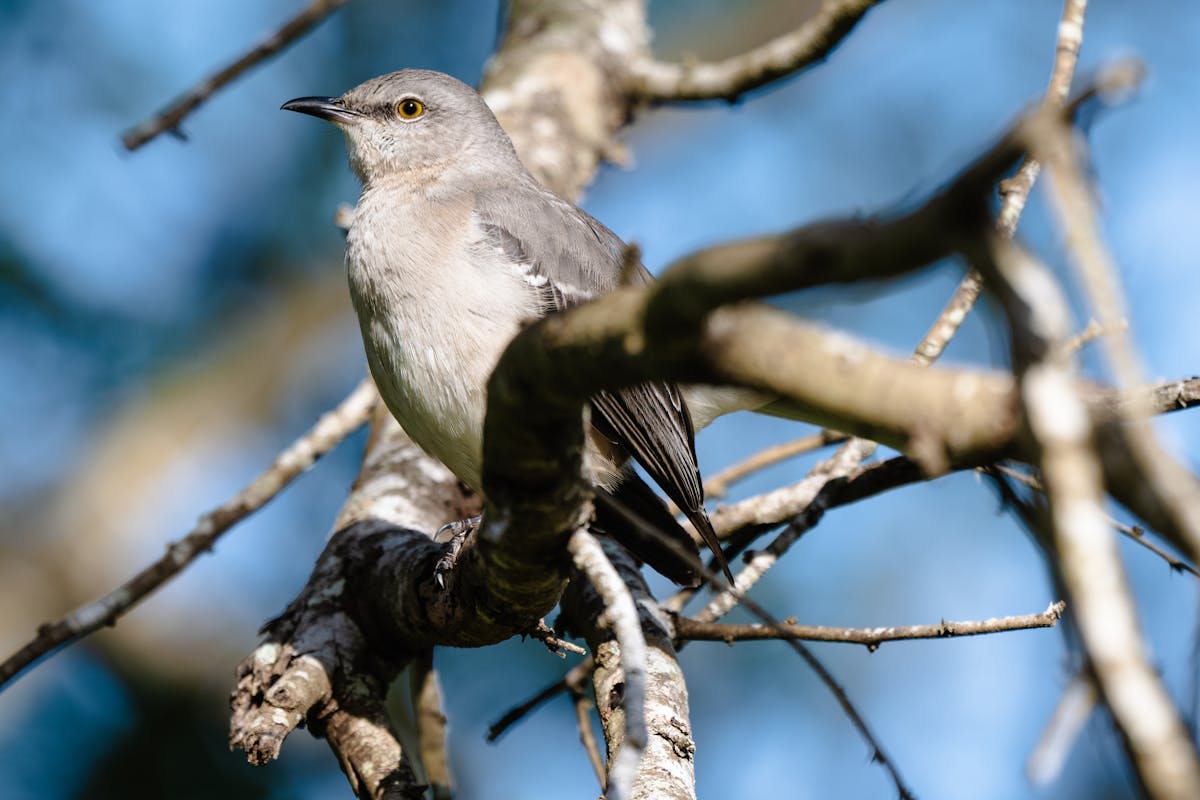
Northern Mockingbird (Mimus polyglottos)
Texas’s state bird, the Northern Mockingbird, is known for its ability to mimic other birds.
ID Key Points:
-
Medium-sized, gray above, white below.
Diet: They prefer:
-
Fruits
-
Berries
-
Insects
Seasonal Visitors
Backyard Birds of Texas
Spring and Summer (March–September)
-
Great-tailed Grackle (Quiscalus mexicanus): Big and boisterous, with a medley of calls.
-
Painted Bunting (Passerina ciris): The most ornate small bird in North America.
-
Scissor-tailed Flycatcher (Tyrannus forficatus): Instantly recognizable by its long tail.
-
Indigo Bunting (Passerina cyanea): Adult males are bright blue and migratory.
-
House Finch: Cheerful and common, with a rosy-red head.
Fall and Winter (October–March)
-
American Goldfinch (Spinus tristis): Winter plumage is olive-yellow.
-
Junco (Junco hyemalis): Known as “Snowbirds,” they flock back in winter.
-
White-throated Sparrow (Zonotrichia albicollis): Recognizable by its plaintive whistle.
-
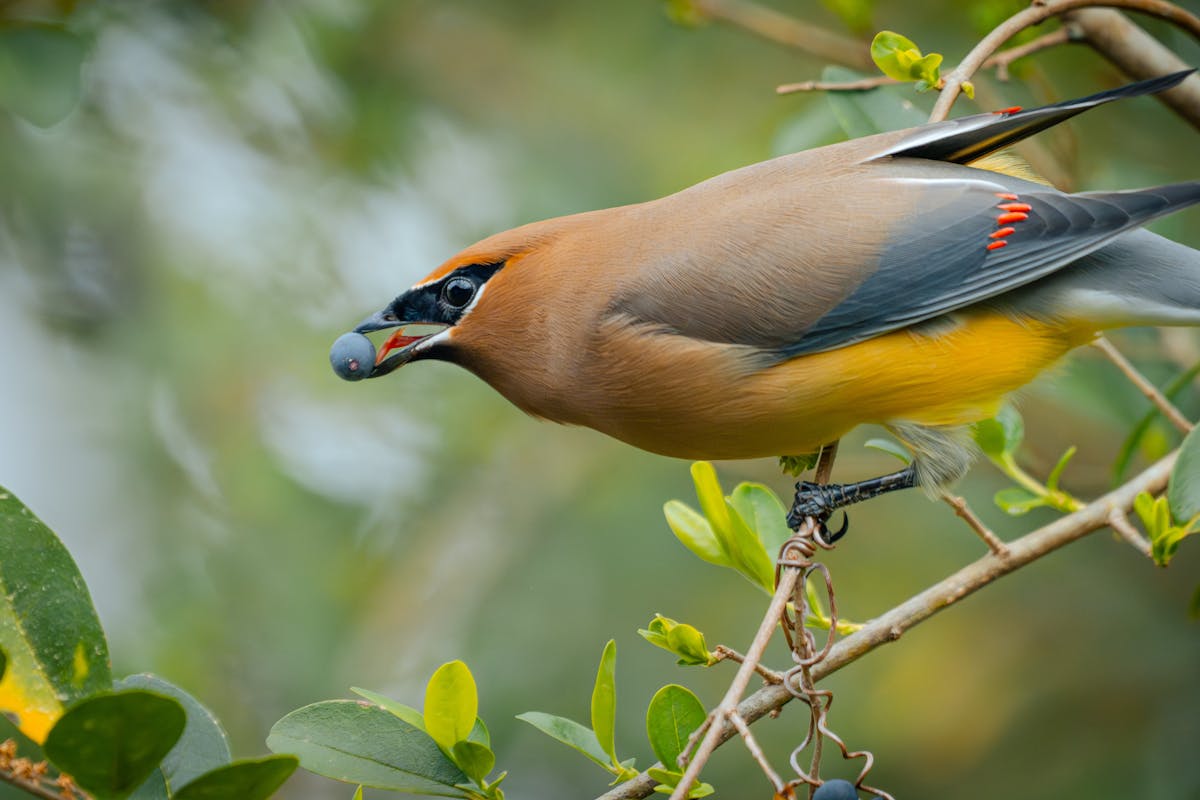
Cedar Waxwing (Bombycilla cedrorum): Fly in flocks and eat berries.
Texas Backyard Birds: Monthly Activity Guide
| Month | What to Watch For |
|---|---|
| January | Juncos, sparrows, Cedar Waxwings, winter finches |
| February | First singing Cardinals; early returning Goldfinches |
| March | Hummingbirds arrive; warblers begin migration |
| April | Peak spring migration; Painted Buntings arrive |
| May | Breeding activity; Indigo Buntings, Scissor-tailed Flycatchers |
| June | Nesting season; young birds visiting feeders |
| July | Peak hummingbird activity; Rufous Hummingbirds passing through |
| August | Shorebird migration; Painted Buntings at feeders |
| September | Fall migration; warblers passing through; Monarch butterflies |
| October | Winter birds arriving; first Juncos appear |
| November | Cedar Waxwings return; full winter bird variety |
| December | Christmas Bird Count; peak winter feeder activity |
What to Feed Texas Backyard Birds
Seed/Food
-
Black-oil sunflower seeds: Most species, like cardinals, chickadees, finches, and jays.
-
Safflower seeds: Cardinals and a few other birds.
-
Nyjer/thistle: Buntings and House Finches.
Transform your backyard into a haven for these beautiful birds!

MD Imdadul Haque is the founder of BirdzFly, a research-backed resource on North American backyard birds. Drawing on years of independent study into bird identification, behavior, and migration patterns, he writes in-depth guides designed to help US birders understand the species in their own backyards — from common feeder visitors to seasonal migrants passing through.