
Hummingbird’s Tongue
For a long time, scientists assumed hummingbirds drank nectar by capillary action — the same physical force that draws water up a thin tube. The tongue, being long and forked at the tip, seemed to function like a pair of capillary tubes.
This turned out to be wrong. A 2011 study using high-speed cameras finally showed what was actually happening, and it’s considerably more interesting than passive capillary action.
What the Tongue Actually Does
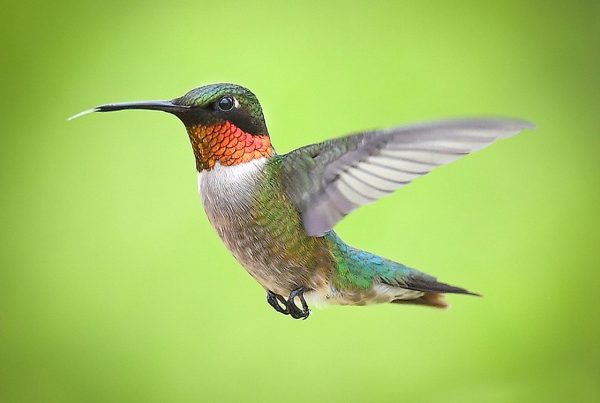
A hummingbird’s tongue is about as long as its bill, sometimes longer. It’s forked at the tip, with each fork fringed with hair-like projections called lamellae. When the tongue enters nectar, these fringes trap the liquid.
But the key discovery was elastic. The tongue is not a rigid tube — it’s elastic, and it flattens as it enters the flower and then springs back to its normal round shape as it retracts. This shape change actively traps nectar rather than relying on surface tension alone.
The motion is fast. A hummingbird licks at roughly 15–20 times per second during active feeding. Each lick: tongue extends, fringes open, nectar trapped, tongue retracts, fringes close and squeeze nectar toward the throat. Then repeat.
It functions more like a fluid trap than a straw. The energy for nectar collection comes partly from the tongue mechanics, not just from suction or surface tension.
How Long Is a Hummingbird’s Tongue
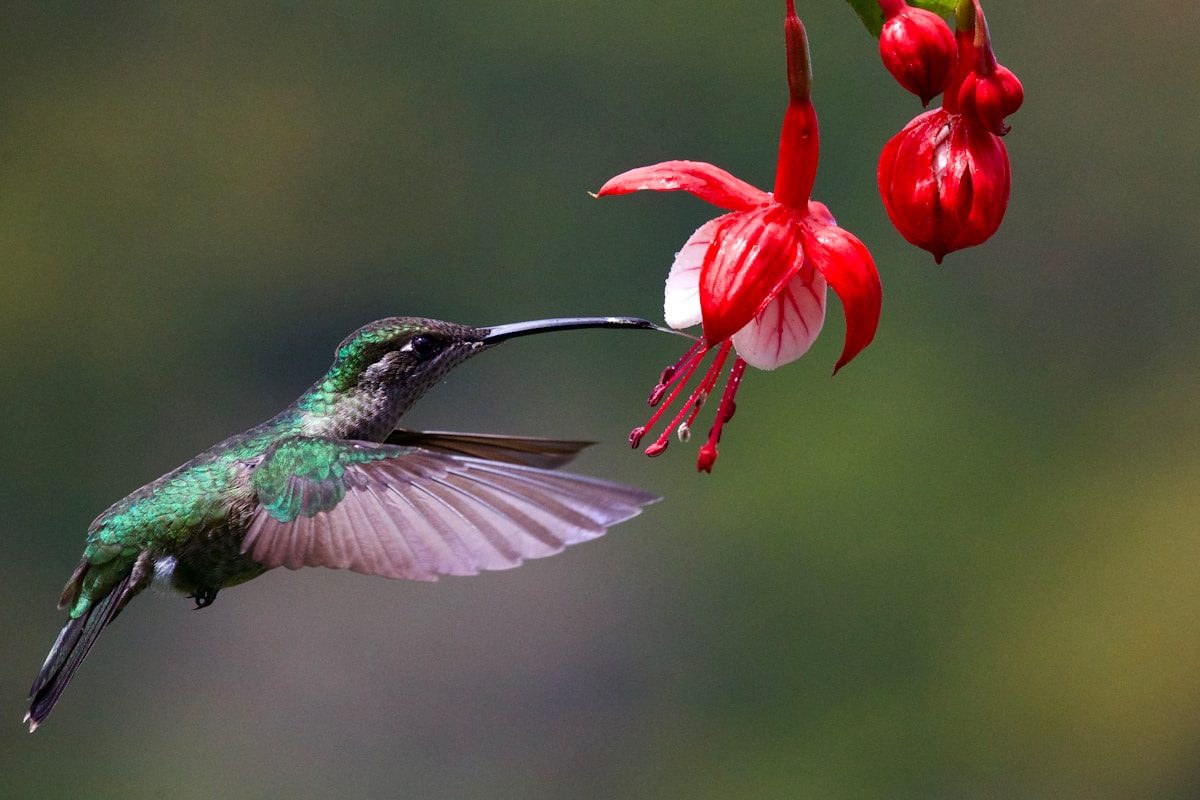
Longer than the bill in most species. The tongue wraps around the back of the skull when fully retracted — it coils behind the eye and over the top of the head, attached to a structure called the hyoid apparatus. This allows the tongue to extend well beyond the bill tip.
In species that feed from particularly deep flowers, the tongue can extend 2–3cm beyond the bill tip. The Sword-billed Hummingbird of South America has a bill longer than its body and a tongue to match — an extreme case of co-evolution with deep flowers, but illustrative of the general principle.
The Bill and Tongue Work Together
The bill opens slightly at the tip during feeding to allow the tongue to move. High-speed video shows the lower bill bending downward as the tongue extends — a slight flex that opens space for the tongue’s rapid movement. This isn’t widely known and surprised researchers when it was first documented.
The tongue itself is not used to taste in the way mammal tongues do. Taste receptors in birds are generally limited, and hummingbirds appear to select flowers based on color and memory of reward rather than tasting and evaluating each one. They learn which flowers are worth returning to.
Species Variation
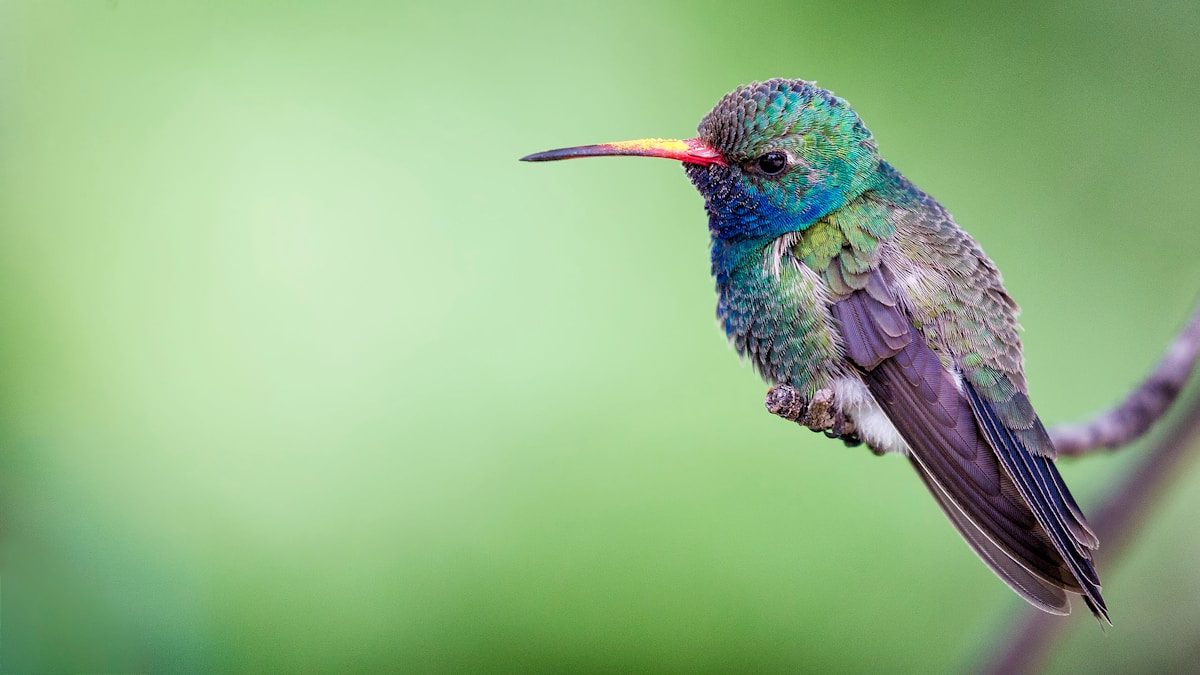
Hummingbird’s Tongue
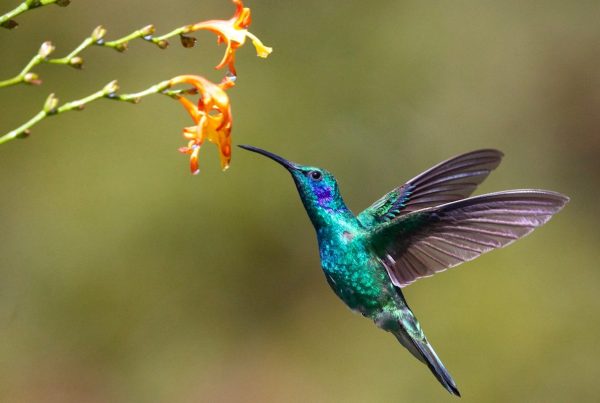
Different hummingbird species have different bill and tongue shapes tuned to different flowers. Straight bills work for open tubular flowers. Curved bills match curved flowers like heliconias. The hermit hummingbirds of South America often have dramatically curved decurved bills that match the curve of the flowers in their territory.
In North America, the variation is less extreme, but still present. Ruby-throated Hummingbirds have straight bills suited for trumpet vine, salvia, and similar open tubular flowers. Anna’s Hummingbirds, feeding from a wider range of plant types on the Pacific Coast, have slightly more generalist bill shapes.
How This Affects Feeder Design
Understanding the tongue mechanics explains why feeder port design matters. Ports need to be deep enough for the bill to insert but not so deep that the tongue can’t reach the nectar surface and retract quickly. The nectar level also matters — feeders that allow the nectar level to drop too low mean the tongue can’t reach it effectively.
This is part of why keeping feeders full is practical as well as generous. A feeder that’s a quarter full isn’t just aesthetically less appealing — it may actually be harder for hummingbirds to feed from efficiently.
FAQ
How does a hummingbird drink nectar?
By rapidly extending and retracting a forked, fringed tongue that traps nectar through an elastic shape-change mechanism — not by capillary action as was previously thought. The tongue moves at 15–20 times per second.
How long is a hummingbird’s tongue?
Longer than the bill in most species. It coils around the back of the skull when retracted and can extend well beyond the bill tip during feeding.
Does a hummingbird use its tongue to taste?
Not in the detailed way mammals do. Hummingbirds select flowers based on color recognition and learned memory of which flowers provide good nectar rewards, rather than real-time tasting.
What are the fringes on a hummingbird’s tongue for?
The lamellae — hair-like fringes on the forked tongue tip — trap nectar as the tongue enters the flower. The elastic recoil of the tongue then moves the trapped nectar toward the throat.
For more on hummingbird biology, see our guides on what hummingbirds eat, why hummingbirds can fly backwards, how fast hummingbirds fly, hummingbird lifespan, and 25 surprising hummingbird facts.

MD Imdadul Haque is the founder of BirdzFly, a research-backed resource on North American backyard birds. Drawing on years of independent study into bird identification, behavior, and migration patterns, he writes in-depth guides designed to help US birders understand the species in their own backyards — from common feeder visitors to seasonal migrants passing through.