
Hummingbirds in Texas 2026 Species
Introduction
Texas is one of the top hummingbird states in the country. It is the only US state where hummingbird species can be seen regularly. Texas birders have spotted over 18 species. That’s a great variety compared to the rest of the country, where only one or two species are seen.
Year-Round Hummingbird Experiences
In an average year, Texas offers remarkable hummingbird experiences throughout all twelve months. You might see:
-
Broad-tailed Hummingbirds in West Texas’ Big Bend country.
-
Ruby-throated Hummingbirds migrating along the Gulf Coast.
This ultimate guide includes every species you may experience, as well as arrival and departure dates for each region. It also highlights great locations for serious hummingbird watching.
Texas Hummingbird Species: Complete List
Year-Round Residents
Buff-bellied Hummingbird (Amazilia yucatanensis)
The Buff-bellied Hummingbird is the most common resident in Texas. It is mostly found in the Lower Rio Grande Valley and along the Gulf Coast.
-
Appearance: Soft tan belly, bright green back and throat, and a distinctive red bill.
-
Migration: Uniquely migrates north along the Gulf Coast in the fall after breeding.
Where to see them:
-
Santa Ana National Wildlife Refuge
-
Estero Llano Grande State Park
-
King Ranch
-
Backyards around Brownsville and McAllen
Spring and Summer Breeders (March–September)
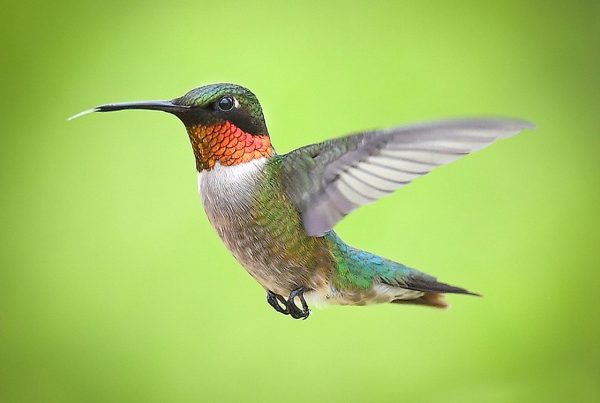
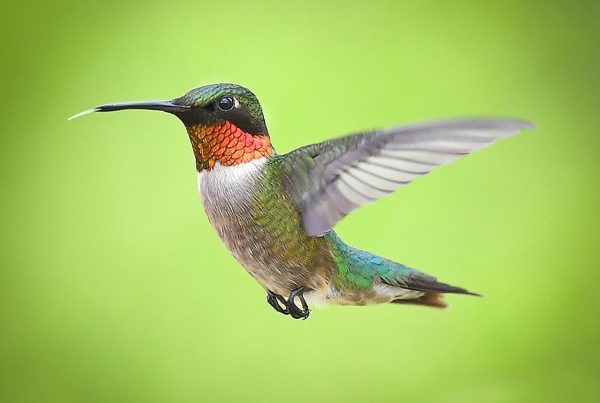
Ruby-throated Hummingbird (Archilochus colubris)
This is the most common hummingbird in eastern Texas.
-
Appearance: Males have an iridescent ruby red gorget that shines brightly.
-
Migration: They nest in Texas before migrating to Mexico.
Timing:
-
Arrival: Late February to early March in South Texas; Mid-March in central and east Texas.
-
Peak season: April to September
-
Departure: Many have left by late October.
Black-chinned Hummingbird (Archilochus alexandri)
Common in Central and West Texas.
-
Appearance: Males have a black throat bordered with violet-purple.
-
Nesting: Flexible, nesting in desert scrub and suburban yards.
Timing:
-
Arrival: Late March to April
-
Peak season: April to August
-
Departure: September to October
Additional Breeding Species
-
Broad-tailed Hummingbird (Selasphorus platycercus)
-
Rufous Hummingbird (Selasphorus rufus)
-
Blue-throated Mountain-gem (Lampornis clemenciae)
-
Lucifer Hummingbird (Calothorax lucifer)
Rare and Occasional Visitors
Texas also attracts stunning rare hummingbirds, including:
-
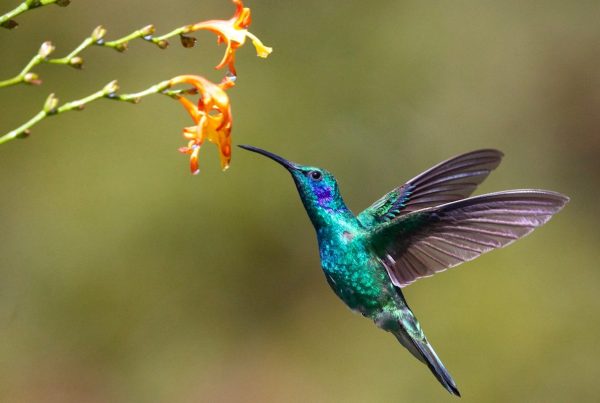
Green Violet-ear — vagrant from Mexico
-
Plain-capped Starthroat — rare Mexican visitor
-
Berylline Hummingbird — rare but periodic in Big Bend
-
White-eared Hummingbird — rare visitor in Chisos Mountains
-
Broad-billed Hummingbird — not common, but reliable in Big Bend
-
Costa’s Hummingbird — rare visitor in West Texas
-
Anna’s Hummingbird — increasingly common in Gulf Coast winters
-
Calliope Hummingbird — smallest hummingbird in the US
Keeping feeders up in winter can help you spot these rare visitors.
Texas Hummingbird Migration Calendar by Region
South Texas (Rio Grande Valley)
Month Activity
-
January–February: Buff-bellied present year-round; Ruby-throated arrives late February.
-
March–April: Migration in progress; Ruby-throated and Black-chinned possible.
-
May–July: Breeding residents are active; peak activity occurs.
-
August–October: Migration; Rufous peaks in August-September.
-
November–December: Buff-bellied appears; watch for winter vagrants.
Central Texas (Austin, San Antonio)
Month Activity March: First Ruby-throated males arrive. April–May: Peak spring migration; Black-chinned arrive. June–August: Breeding residents are active at feeders. September–October: Peak migration; Rufous presence. November–February: Minimal feeders; rare visitors.
East Texas
Similar timing to Central Texas. Ruby-throated is dominant.
West Texas (Trans-Pecos, Big Bend)
The most diverse hummingbird watching in Texas.
Month Activity
-
April: Black-chinned and Broad-tailed arrive.
-
May–June: Peak activity; Lucifer and Blue-throated active.
-
July–August: Early migratory Rufous; peak diversity of species.
-
September: Migration tapering; still excellent variety.
-
October–March: Buff-bellied far south; uncommon winter stragglers.
Texas Hummingbird Watching Locations
Hummingbirds in Texas 2026 S
Big Bend National Park
The ultimate spot for hummingbird watching in Texas. You can see 10+ species in just one morning.
-
Best months: May through September
Davis Mountains State Park
A prime mountain area for Broad-tailed Hummingbirds.
Santa Ana National Wildlife Refuge
A key spot for Buff-bellied Hummingbirds year-round.
Estero Llano Grande State Park (Weslaco)
User-friendly birding park with feeding stations attracting various species.
Southeast Texas (High Island)
Spring migration can lead to amazing concentrations of Ruby-throated Hummingbirds.
Texas Hill Country (Kerrville, Fredericksburg)
Great habitat for Ruby-throated and Black-chinned Hummingbirds.
Best Plants to Attract Hummingbirds
Native plantings are the best way to attract Texas hummingbirds. Here are some proven performers:
For All Texas
-
Turk’s Cap (Malvaviscus arboreus)
-
Native varieties of Salvia (Salvia species)
-
Trumpet Vine (Campsis radicans)
-
Cardinal Flower (Lobelia cardinalis)
-
Texas Paintbrush (Castilleja indivisa)
West Texas / Chihuahua Desert
-
Desert Willow (Chilopsis linearis)
-
Ocotillo (Fouquieria splendens)
-
Penstemon species
-
Agave flowers
Facts You Probably Do Not Know About Texas Hummingbirds
-
Texas has more species of hummingbirds than any other state, with 18+ seen.
-
Over 10 species have been seen in a single day in Big Bend National Park.
-
Female hummingbirds build their nests using plant fibers and spider silk.
-
Hummingbird metabolism is incredible; their heart beats 1,200 times per minute in flight.
-
Ruby-throats fly directly across the Gulf, covering 500 miles over open water in about 18-22 hours without a break.
FAQ: Texas Hummingbirds
Q: When should I put out hummingbird feeders in Texas? A: Put feeders out by mid-April in West Texas and Big Bend. In South Texas, keep them up year-round.
Q: Do hummingbirds winter in Texas? A: Yes, Buff-bellied Hummingbirds are year-round residents in South Texas and the Gulf Coast.
Q: Which is the rarest hummingbird in Texas? A: The Lucifer Hummingbird is relatively common in Big Bend but seldom seen elsewhere.

MD Imdadul Haque is the founder of BirdzFly, a research-backed resource on North American backyard birds. Drawing on years of independent study into bird identification, behavior, and migration patterns, he writes in-depth guides designed to help US birders understand the species in their own backyards — from common feeder visitors to seasonal migrants passing through.