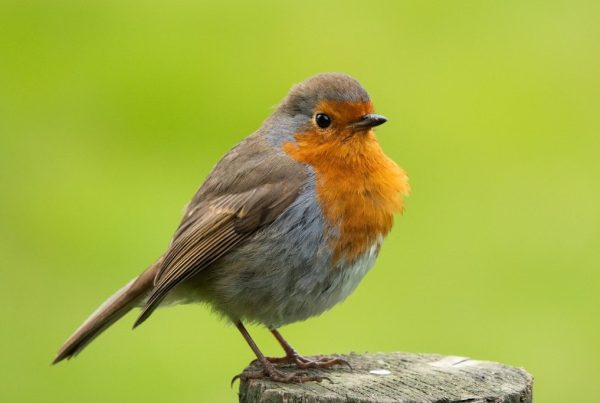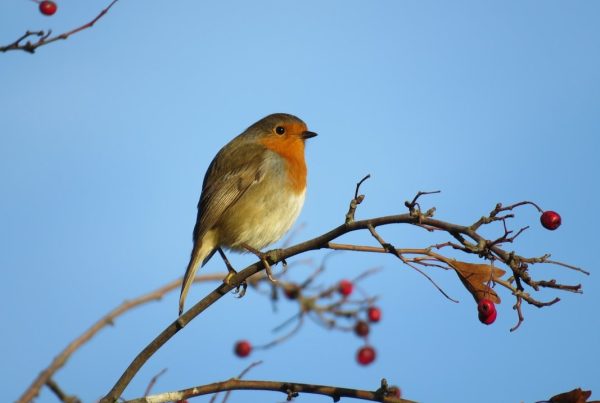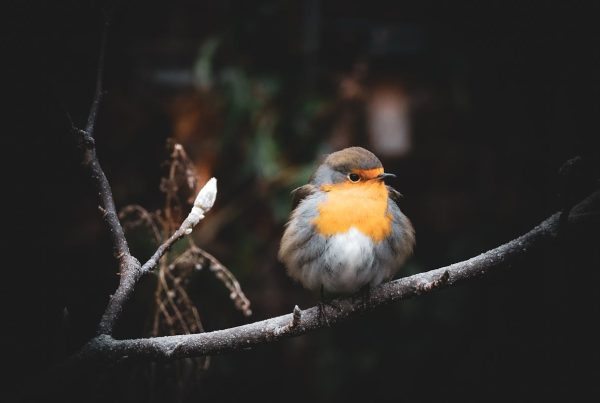

The robin is one of the most recognized birds in both North America and Britain — though the American Robin and European Robin are actually unrelated species that happen to share a name and a reddish breast. Here are 10 genuinely interesting facts about robins, covering both species.
1. Juvenile Robins Don’t Have Red Breasts
Young American Robins have spotted, brownish breasts rather than the solid orange-red of adults. The adult coloring only appears after their first molt, which is why a spotted “robin” hopping on your lawn in summer is actually a juvenile, not a different species.
2. American Robins Are Thrushes
The American Robin belongs to the thrush family (Turdidae), making it a close relative of species like the Hermit Thrush and Wood Thrush — not closely related to the European Robin, which is in the Old World flycatcher family.
3. Both Sexes Sing
Unlike many songbirds where only males sing, both male and female European Robins sing — including in winter, when they hold separate individual territories rather than pairing up.
4. The European Robin Is Britain’s National Bird
The European Robin was voted Britain’s unofficial national bird in a 1960 public poll, cementing its status as one of the most beloved birds in the UK — frequently associated with Christmas cards and garden folklore.
5. Every Robin’s Breast Pattern Is Unique
Like a fingerprint, the exact pattern and intensity of an individual robin’s chest coloring varies enough that birds can sometimes be distinguished from one another by careful observation, particularly useful in research settings tracking individual birds over time.
6. Personality Varies by Population
European Robins in Britain are famously tame, sometimes approaching gardeners directly for disturbed worms. Continental European robin populations tend to be far more wary of humans, behaving more like typical shy woodland birds — a striking behavioral difference within the same species.
7. Robins Can Raise Multiple Broods a Year
American Robin pairs typically raise 2–3 broods per season, with some successful pairs managing as many as 3 successful nests in a single year under good conditions.
8. Some Robins Live Surprisingly Long
Despite high mortality in their first year, individual robins have been documented living well past 8 years in the wild — notably long for a small songbird facing predation, weather, and disease every year of its life.
9. Robins Were Introduced to Other Countries — and Failed
Attempts to introduce European Robins to Australia, parts of North America, and New Zealand in past centuries did not establish lasting populations, for reasons including habitat mismatch and competition from native species.
10. The Robin’s Blue Eggs Are a Pigment, Not a Dye
American Robin eggs get their signature turquoise-blue color from a pigment called biliverdin, deposited in the shell during egg formation — see our full guide on why robin eggs are blue.
For more on robins, see our complete guides on the American Robin and European Robin.

MD Imdadul Haque is the founder of BirdzFly, a research-backed resource on North American backyard birds. Drawing on years of independent study into bird identification, behavior, and migration patterns, he writes in-depth guides designed to help US birders understand the species in their own backyards — from common feeder visitors to seasonal migrants passing through.