
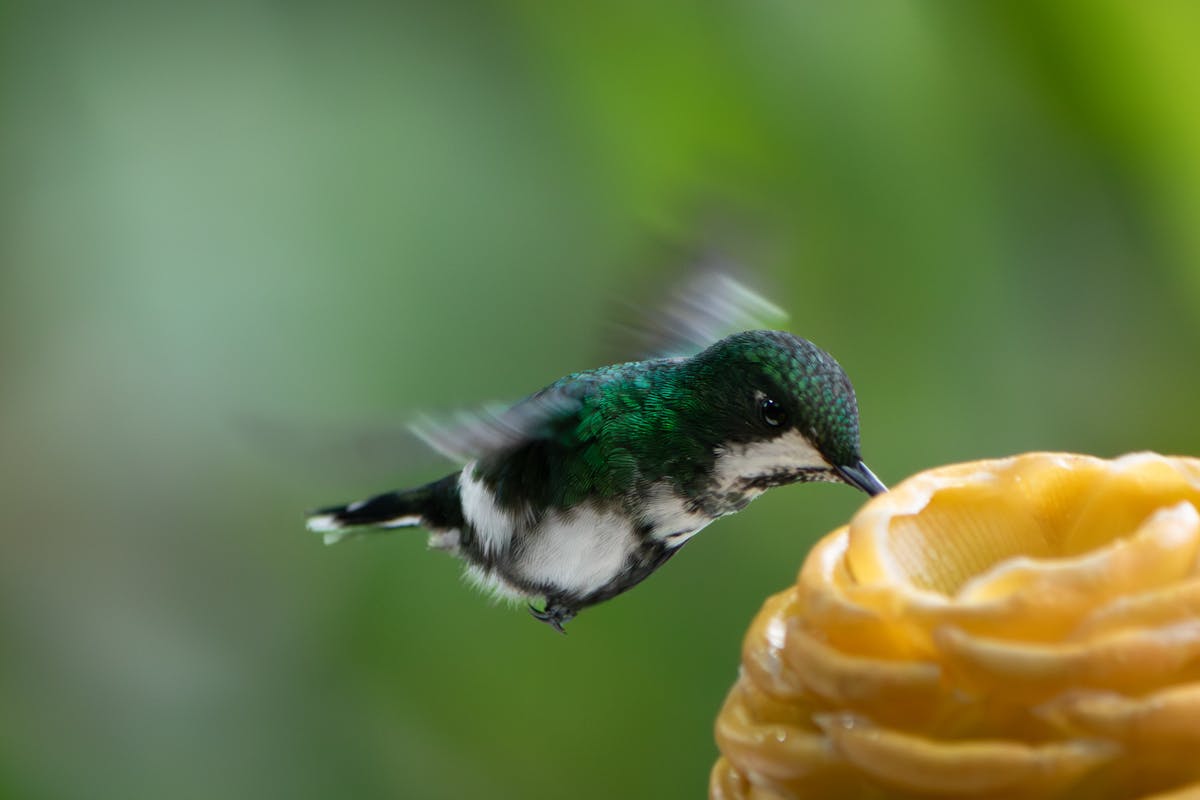
Spiritual Hummingbird
Patricia had not cried in three weeks. Not since the funeral. Not since the folded flag. Not since the last of the casserole dishes had been returned and the sympathy cards stopped coming in. The world slowly began to whirl around her again without her husband of 41 years in it.
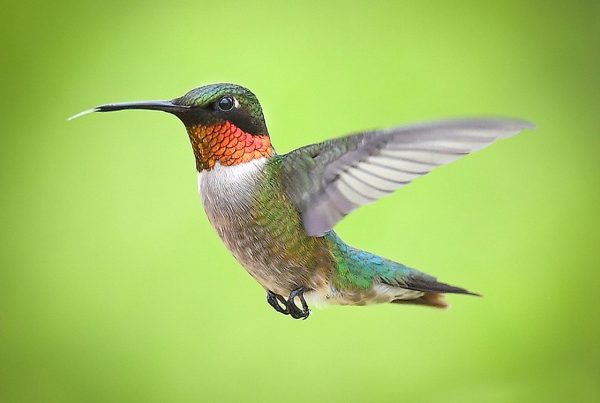
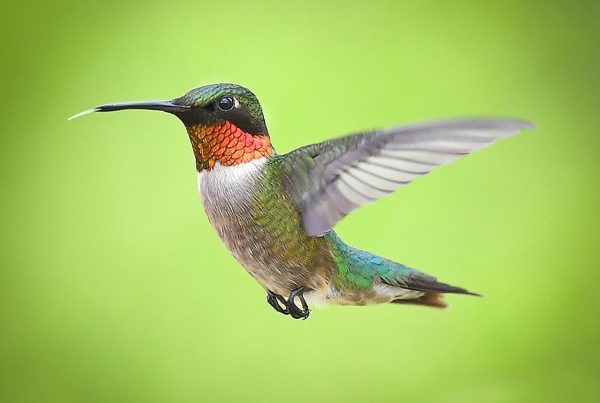
One Tuesday morning, she stood at her kitchen sink when something moved her to look up. A ruby-throated hummingbird hovered just outside the window. It wasn’t feeding or passing through. It hovered at eye level, blurring its wings as it looked right at her.
She froze and stood completely still for what felt like a long time. When it finally flew off, she sat at the kitchen table and cried for the first time since he died.
She couldn’t explain why. She didn’t try to. She just knew that something had come to her on the currents of that little bird. She was not the first to have such feelings, and she won’t be the last.
The Multiple Meanings of the Hummingbird
Few birds evoke the same feelings as the hummingbird. Its unique movements—hovering in midair, flying in reverse, and darting sideways—make it special.
Key Facts about Hummingbirds:
-
They can weigh less than a penny.
-
Their hearts beat over 1,000 times a minute.
-
Watching them has a calming effect on people.
Long before science explained this, spiritual traditions across cultures attributed deep meanings to the hummingbird. These meanings, from different cultures that never communicated, show a remarkable range of themes. This convergence is worth noting.
The Ancient Roots of Indigenous American Traditions
Hummingbirds are unique to the Americas. For Indigenous nations, they held special cultural and spiritual significance.
The Aztec Connection
The hummingbird was not just a symbol for the Aztec people; it was a god. It symbolized Huitzilopochtli, the Aztec god of sun and war.
-
Warriors who died in battle were believed to be reborn as hummingbirds.
-
The hummingbird represents bravery, resurrection, and the cycle of life beyond death.
This was central to the Aztec pantheon. A small, jewel-hued bird was chosen to represent the sun and warrior spirit, showing its spiritual importance.
Cherokee and Eastern Woodland Traditions
In Cherokee culture, the hummingbird is linked to:
-
Healing and retrieving what has been lost.
-
A story where a hummingbird flies to the spirit world to find tobacco, a sacred medicine.
The hummingbird acts as a messenger and healer. It also symbolizes love, suggesting that seeing one means love is near or safeguarded.
Andean and South American Traditions
In the Andes, hummingbirds connect the human and divine. They symbolize:
-
Freedom from constraints.
-
Guidance for souls over hills, as many cultures buried the dead with hummingbird feathers.
Critical Spiritual Messages of Hummingbird Visitations
When a hummingbird visits, certain themes often emerge:
Joy Is Available Right Now
The hummingbird drinks nectar, which shows that joy can be found in small moments.
-
It teaches us that happiness does not depend on perfect circumstances.
-
If you’ve been waiting for life to slow down to feel happiness, the hummingbird encourages you to stop waiting.
You’re Stronger Than You Think
A hummingbird weighs only three grams. Yet, some migrate thousands of miles and survive harsh conditions.
-
This shows that size does not determine your capabilities.
-
A hummingbird in tough times reminds you that you can overcome challenges, no matter how small you feel.
Flexibility Brings Freedom
The hummingbird can fly in all directions—forward, backward, up, down, and even hover.
-
This teaches us about adaptability.
-
If you’ve outgrown a single path or outcome, the hummingbird reminds you of all the other paths available for exploration.
Embrace the lessons of the hummingbird and let them guide you on your journey.
A Loved One Is Near
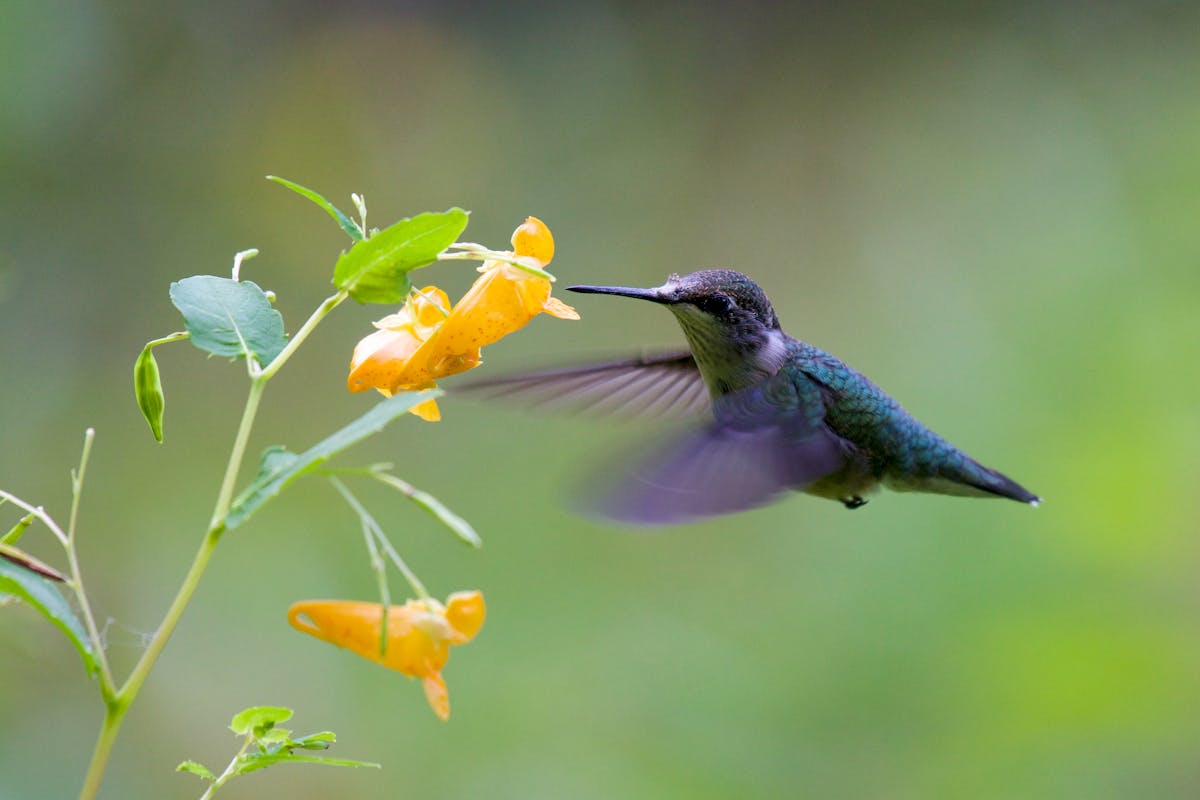
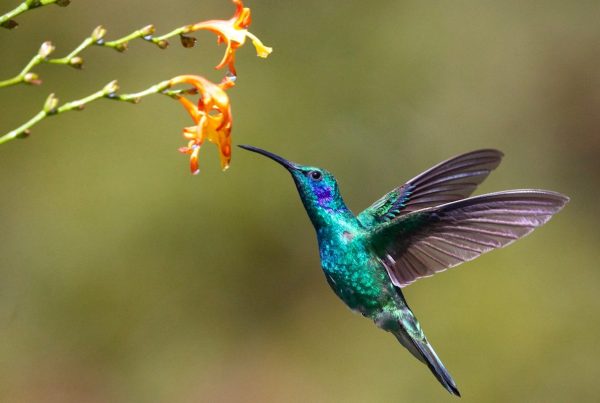
Hummingbird on Flower
Many people in America share a similar spiritual experience with hummingbirds. Their stories are strikingly alike.
Personal Stories
-
On the morning of her mother’s memorial service, a woman in Ohio sees her first hummingbird.
-
A widower in Arizona cared for his late wife’s garden for years. He never attracted a hummingbird—until now. On what would have been their 50th anniversary, he sees one near the Andromeda Rose, her favorite flower.
-
A hospice nurse notes that hummingbirds are frequently mentioned during the days after a loved one dies.
It’s a common belief across cultures and religions that the hummingbird brings messages from those who have passed. Departed souls can use its presence to let us know they are still watching and loving us.
This belief doesn’t need scientific framing. It can be real for those who experience it.
It Is Time to Be Present
The hummingbird lives in the present moment. It doesn’t plan for the future or dwell on the past. Its only perspective is now — whether it’s on a flower or flying in the air.
Every spiritual tradition that includes these sacred beings recognizes this about the hummingbird. When it appears, it invites you to:
-
Put down the emotional toll you’ve been bearing.
-
Simply be where you are.
Most of us can do this without trying. Watching a hummingbird hover for a moment creates presence. Maybe that’s the whole message.
Addresses the Spiritual Significance of Peak Experiences
Not every hummingbird encounter is the same, and each situation holds its own meanings.
-
Hummingbird hovering at your window: Someone on the other side is reaching out. Pay attention to your thoughts or emotions leading up to its appearance.
-
Hummingbird moving toward your face: An emergency alert. Stop what you are doing; something in your life needs your attention now.
-
Hummingbird landing near you: This is rare and holds deep meaning. It signifies profound trust between nature and you, reflecting on what you were thinking as it unfolded.
-
Two hummingbirds together: Represents unison and harmony. It’s a message about relationships that need attention and kindness.
-
Hummingbird during grieving: Most frequently reported, it reminds you that you are not alone. Love does not end.
-
Hummingbird at a crossroads: Have faith in yourself and move forward. The answer you feel is right.
-
Spotting a hummingbird and feeling emotion: Don’t fight it or analyze it away. Let it be what it is.
The Meaning of Color: What Ruby Throat Represents
Colors carry spiritual meaning, and the hummingbird’s colors are significant.
-
Ruby-red throat: Associated with life force, passion, heart chakra, and vitality. Red represents being alive.
-
Green body: Linked to growth, healing, renewal, and nature. This is the healer in a green robe.
-
Iridescence: The changing colors of hummingbird feathers remind us that truth isn’t always fixed. Perspective shapes what we see, and beauty often depends on how light hits it.
When Science and Spirit Agree
Many characteristics we attribute to hummingbirds — resilience, flexibility, and enjoying small things — reflect their biology and behavior.
This isn’t coincidence. These spiritual meanings arise from careful observation and respect for nature. The hummingbird exists at the intersection of the physical and metaphysical. Science and spirit reinforce one another.
How to Welcome the Message
If hummingbirds appear in your life, there are ways to honor that connection:
-
Create physical space:
-
Plant red and orange flowers like trumpet vine, salvia, and bee balm.
-
Set out a feeder with fresh sugar water.
-
-
Create internal space:
-
When one appears, stop. Put down your phone and watch until it leaves. Notice your thoughts just before it arrives.
-
-
Keep a record:
-
Many people notice patterns in hummingbird visits. A journal helps illuminate these patterns.
-
-
Receive without explanation:
-
The comfort a hummingbird brings in sorrow needs no justification. Allow it to be what it is.
-
The Smallest Messenger
Patricia hangs out her hummingbird feeder every April.
She hadn’t told many people what happened that Tuesday morning at the kitchen sink. It’s not easy to discuss. But she knows how she felt. The hummingbird came just when she needed something to stir her.
Every year, on the day the first hummingbird finds her feeder, she says good morning. Not to the bird, but to whatever sent it.
More from BirdzFly:

MD Imdadul Haque is the founder of BirdzFly, a research-backed resource on North American backyard birds. Drawing on years of independent study into bird identification, behavior, and migration patterns, he writes in-depth guides designed to help US birders understand the species in their own backyards — from common feeder visitors to seasonal migrants passing through.