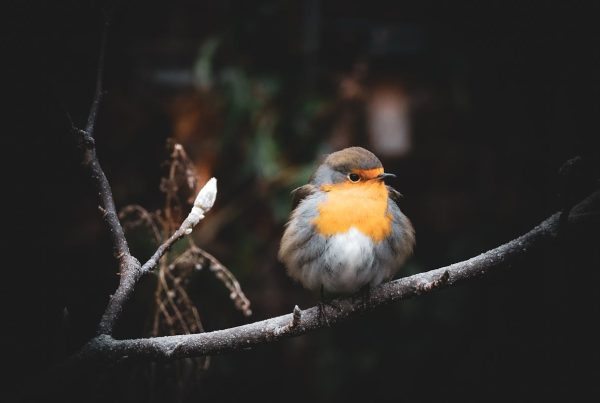
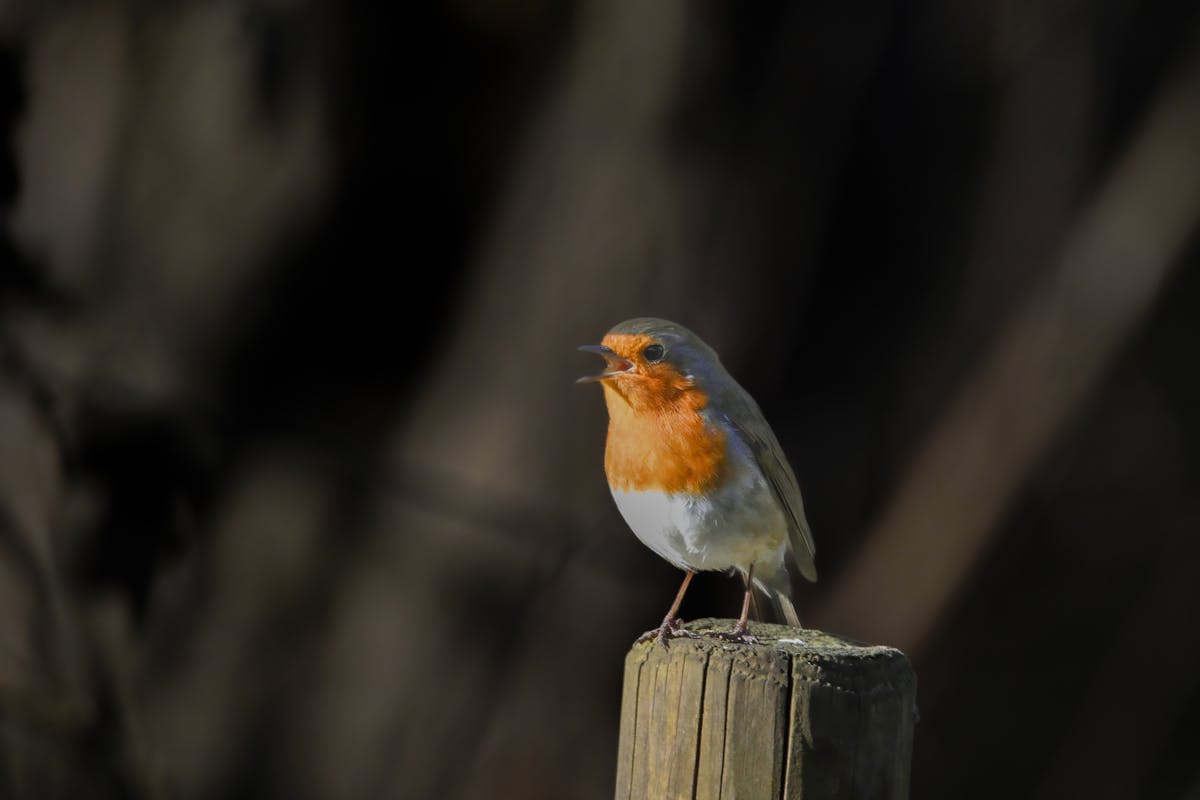
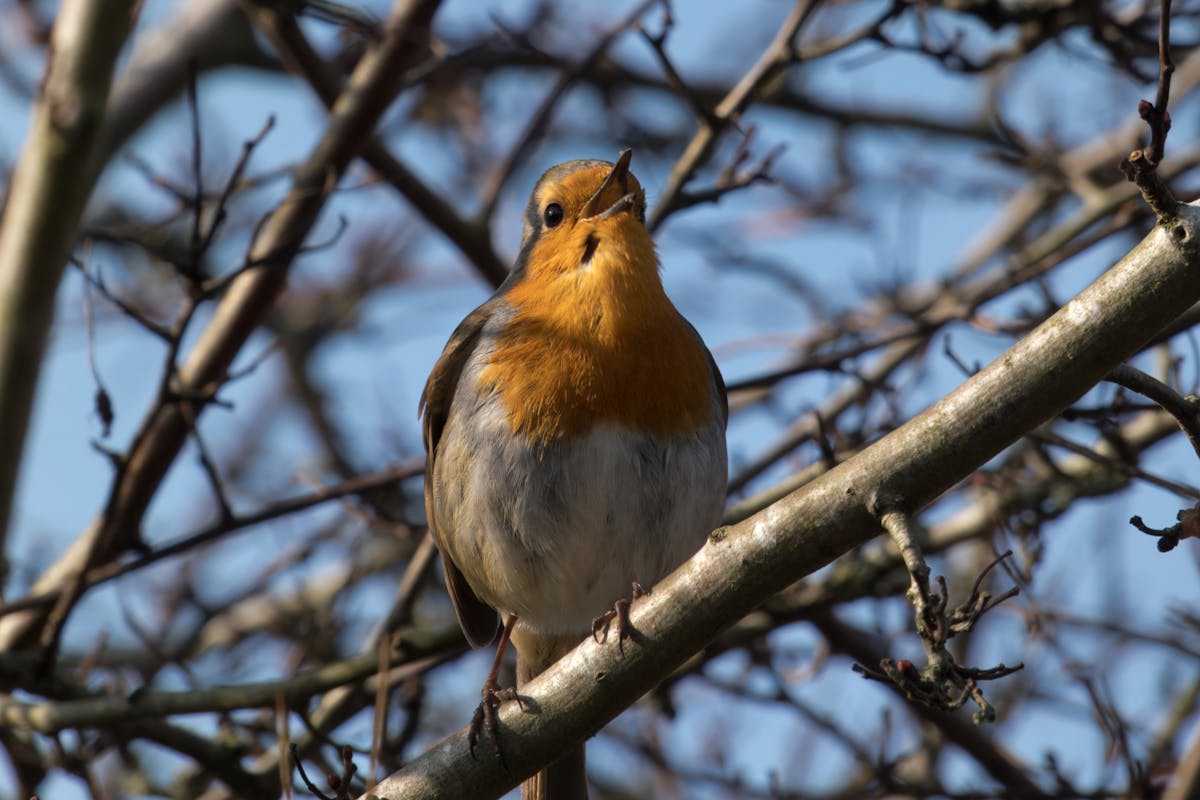
Robins Sing at Night
A Nighttime Inquiry
One Tuesday night at 11:30, a neighbor knocked on David’s door. She was polite and a little embarrassed. She had a burning question that kept her awake for three nights.
“There’s a bird that sings outside my window,” she said. “Every night. Past midnight sometimes. It sounds like a robin. But robins don’t sing at night. Do they?”
David, a birder for thirty years, smiled.
“They absolutely do,” he said. “And there’s a really interesting reason for that.”
For the next twenty minutes, she stood on his doorstep, completely forgetting her complaint. She listened to one of the strangest and most beautiful stories in urban wildlife science.
This is that story.
First — Yes, It’s a Real Robin
Before we dive into the why, let’s settle the what.
-
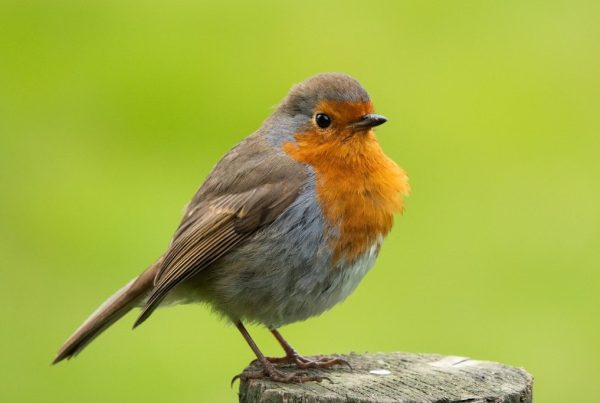
The American Robin is one of the most familiar birds in North America.
-
Its song is a cheerful “cheerily-cheer-up-cheerio.”
-
Many people recognize this song without realizing it. You can also explore other reasons birds sing at night.
What many don’t know is that robins are also common nighttime singers in North American cities and suburbs. So, if you’ve heard a rich, flute-like song outside your window at night, there’s a good chance it was a robin. Not a mockingbird or a tropical visitor, but the same bird that hops on your lawn each morning.
They are just on a different schedule than you expected.
The Science: What’s Actually Happening
Light Is the Trigger — And Artificial Light Did It All
Birds don’t sing on a clock. They sing in response to light.
-
The singing behavior of robins and most songbirds is triggered by light levels.
-
When light rises to a certain point, it activates photoreceptors in the bird’s brain.
-
This light signals the brain that it’s dawn, starting a hormonal cascade that leads to singing.
This worked well in nature. Light meant morning, and morning meant singing. Darkness meant sleep.
Then humans invented artificial lighting. Robins, with one of the lowest light-sensitivity thresholds, began to experience something new: light at midnight.
-
Streetlights
-
Floodlights
-
Illuminated office buildings
-
Car headlights
-
Security lights
To a robin’s ancient, light-sensitive brain, all of this signifies dawn. A robin sitting in a tree under a streetlight at 2 a.m. is not lost. Its biology is functioning as intended. It has detected enough light and has begun singing.
Unfortunately, it’s the middle of the night.
The Research That Proved It
This isn’t just speculation. It has been studied closely.
Researchers at the University of Sheffield found that urban robins sang more than rural ones. The best predictor of nighttime bird song was proximity to artificial light.
-
Robins near bright streetlights sang at night.
-
Robins in darker areas did not.
This relationship was direct and measurable. Additional studies showed that urban robins shifted their singing times to avoid daytime noise. They began singing at night and started their daytime songs earlier.
This suggests that nighttime robin song is not just a reaction to light but also a smart strategy. Singing when it’s quieter allows their song to travel farther and be heard better.
Why Robins Are Especially Light Sensitive
Not all birds respond to light the same way. Robins are particularly sensitive for a biological reason.
Robins are natural early birds. They are among the first to sing before dawn in what is known as the dawn chorus. To achieve this, they developed a lower light-sensitivity threshold than most songbirds.
-
Robins start singing when light levels reach about 0.01 foot-candles — as dim as a candle ten feet away.
-
A typical suburban streetlight emits light levels well above this threshold.
This means that any robin nearby gets a light signal that triggers singing. The robin did not evolve in a world with streetlights, so its sensitivity became a liability with electric light.
Sex, Hormones and the Emotion to Sing
Light does not just trigger song. It also activates hormones.
When a robin’s photoreceptors sense enough light, the signal goes to the hypothalamus. This kicks out hormones that produce testosterone. In male robins, singing behavior is controlled by this hormone.
This is why robins exposed to artificial light sing with full intensity. They are not just testing the waters; they are performing, as if it is dawn.
The Dawn Chorus Connection
To understand nighttime robin song, you need to know about the dawn chorus.
-
The dawn chorus is a remarkable event.
-
In spring and early summer, before sunrise, many songbirds sing together, creating a layered symphony.
-
It peaks just before sunrise and then tapers off as daylight arrives.
Robins are the first to sing. Their low light threshold allows them to respond before other species. This biological clock, regulated by light, is disrupted by artificial lighting. A robin that would normally start singing at 5:10 a.m. may begin at 11:30 p.m. near a streetlight.
For urban robins, the dawn chorus begins at midnight.
Is It Only Males? And Only in Spring?
Two common questions arise — and the answers might surprise you.
Is it only males?
Primarily yes. Song in most songbirds, including robins, is mainly a male behavior driven by testosterone.
-
Female robins do sing soft calls and occasional snippets, but the full song is usually a male.
Is it only in spring?
No, although spring is peak season. The highest volume of robin song occurs during the breeding season from March through July.
However, robins can sing year-round in mild climates, and artificial light can trigger nighttime singing at any time of year.
Winter nighttime singing is rare but real, and it can be stunning to hear.
What About the Noise Factor?
There’s another reason urban robins sing at night that has nothing to do with light.
Cities are loud during the day.
Traffic, human activity, and construction create a noisy environment. Studies show that song range drops in noisy areas.
-
A rural area might carry a song for 200 meters.
-
On a busy street, it may only travel 60 meters.
For a male robin, limited range is a serious concern. If females cannot hear the song clearly, they cannot evaluate the singer.
In summary, robins sing at night due to light sensitivity and the need to communicate effectively in noisy urban environments.
Is Singing at Night Bad for Robins?
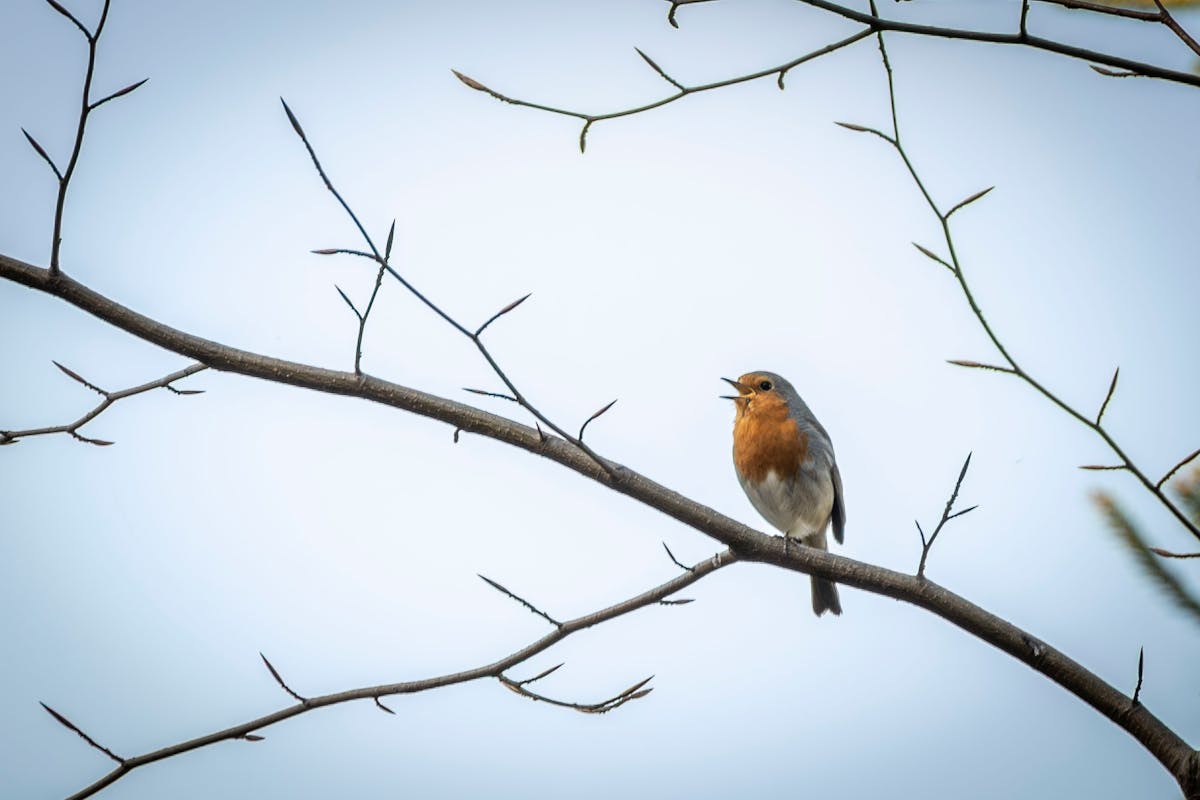
Robins Sing at Night
The Alarming Truth
What seems charming to a sleepless human—a lovely tune echoing through the night—actually signals serious biological disturbances. Researchers are taking this issue seriously.
The Problem of Sleep Disruption
Disruption of normal sleep is the biggest problem. Birds need sleep just like humans. Sleep helps with:
-
Memory consolidation
-
Immune function
-
Physical restoration
A singing robin at midnight means it’s not getting the sleep it needs. If this happens often during nesting season, the bird may suffer from sleep debt. This can affect its well-being, foraging efficiency, and parental care.
Hormonal Disruption from Artificial Light
Chronic exposure to artificial light can disrupt hormones. The testosterone system in birds is meant to activate seasonally. Artificial light can keep this system active outside of the breeding season. We still don’t know how this affects the bird’s health.
Effects on Offspring
Studies show that female robins near artificial light may change:
-
Timing of egg-laying
-
Chick-rearing behavior
These changes could affect the development of nestlings.
7 Things You Need to Know About Robin Night Singing
-
Light is the control. Not temperature, season, or time. If there is enough light, robins will sing, even in the middle of the night.
-
Robins have the lowest light threshold of all common North American songbirds. Their eyes respond to light levels that most birds don’t notice.
-
Urban robins sing more at night than rural ones. This is a clear effect of artificial lighting.
-
Singing at night is an acoustic strategy. Cities are quieter after dark, allowing songs to carry farther.
-
It’s almost always a male. Females rarely sing the full nighttime territorial song.
-
Spring and early summer are peak times. But robins may sing year-round near bright artificial lights.
-
It carries biological debt. Disrupted sleep and hormonal rhythms are a concern for affected birds.
What You Can Do
If a nighttime-singing robin disturbs your sleep, here are some suggestions:
For Your Own Sleep
-
Use blackout curtains. The robin will still sing, but you won’t have to hear it.
For the Robin
-
Put outdoor lights on a timer. If you have a light near trees where birds roost, set it to turn off after midnight. Motion-activated lights can also help reduce exposure to artificial light.
For Your Garden
-
Plant dense evergreen shrubs. These can provide darker roosting spots for birds, reducing their nighttime activity. Learn more about robin symbolism and meaning.
You won’t solve urban light pollution alone, but using a timer on one outdoor light is a meaningful action.
The Song That Finds the Gaps
One night, David’s neighbor listened differently to the robin outside her window.
She didn’t sleep well, but her feelings shifted from anger to wonder.
A bird whose biology adapted over millions of years now responds to the first hint of dawn. It sings at midnight, believing it’s morning.
This bird is not confused or distressed. It reacts accurately to a world that has changed faster than evolution can keep up.
Catching the light where it fell, it means finding the quiet when it arrives. Singing anyway.
Loved this article? Read more on BirdzFly:

MD Imdadul Haque is the founder of BirdzFly, a research-backed resource on North American backyard birds. Drawing on years of independent study into bird identification, behavior, and migration patterns, he writes in-depth guides designed to help US birders understand the species in their own backyards — from common feeder visitors to seasonal migrants passing through.